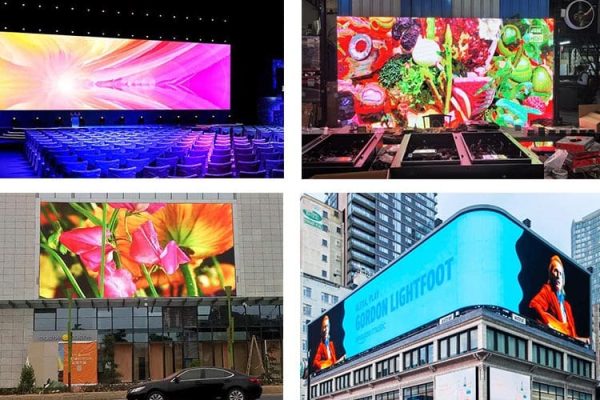
Viewing distance establishes the foundation of any pixel pitch decision. But once you have that baseline, the environment in which your display will operate introduces an entirely separate set of requirements — and indoor and outdoor installations demand very different approaches.
The mistake many buyers make is treating pixel pitch as a purely optical decision. In reality, the environment determines not just which pixel pitch will look correct, but which pixel pitch is even viable from a technical standpoint. A display configuration that performs exceptionally well in a controlled boardroom environment may be completely unsuitable for an outdoor installation facing direct afternoon sunlight — regardless of how fine its pixel pitch is.
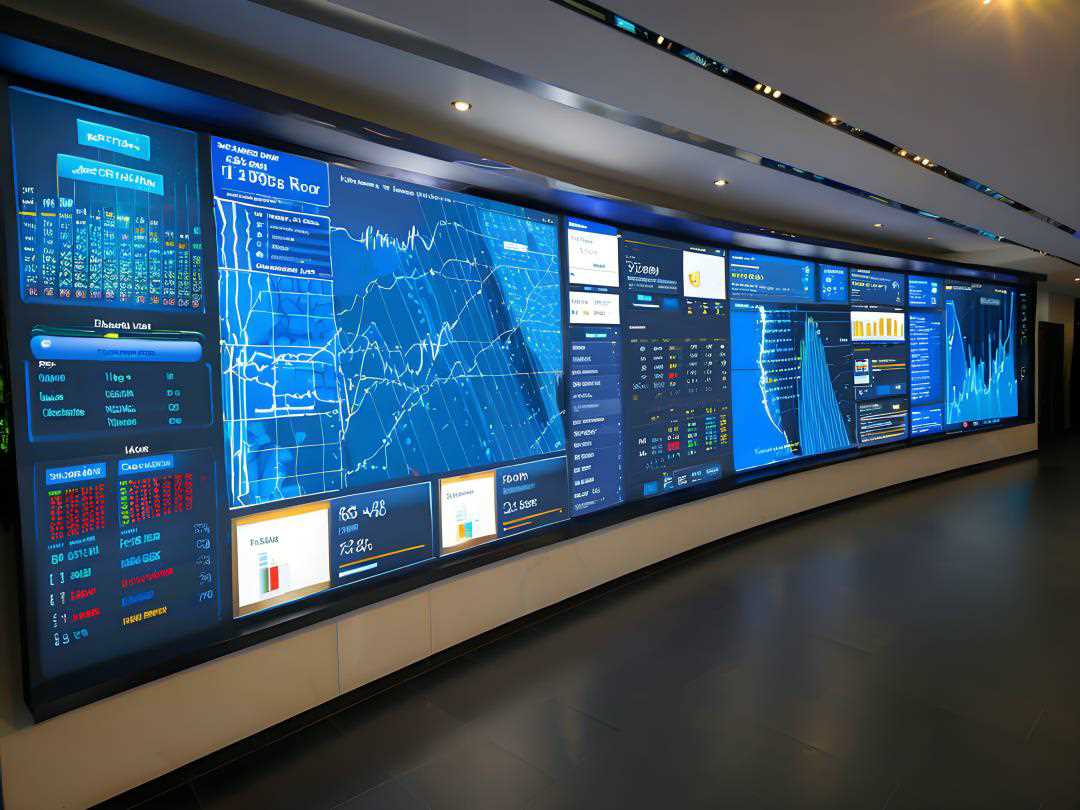
Indoor LED Display Pixel Pitch
Indoor environments offer a significant advantage that is easy to take for granted: controlled light. Without direct sunlight or unpredictable ambient brightness to contend with, indoor displays can prioritize resolution and color accuracy over raw luminance output. This is precisely why the finest pixel pitches — P0.9 through P2.5 — are almost exclusively deployed indoors.
Brightness requirements are moderate. Most indoor LED displays operate comfortably between 800 and 1,500 nits. In environments with heavy artificial lighting, such as retail floors with high-output ceiling fixtures or broadcast studios with professional lighting rigs, brightness may need to reach 2,000 nits or above. But compared to outdoor requirements, these figures are modest — and this matters for pixel pitch selection because higher-density panels with smaller pixel pitches are far easier to manufacture and cool at lower brightness levels.
Color accuracy and uniformity become the priority. Because indoor viewers are typically close to the screen and ambient conditions are stable, any inconsistency in color reproduction or panel uniformity becomes immediately noticeable. For applications like broadcast studios, post-production suites, control rooms, and high-end retail environments, color gamut coverage and factory-level calibration matter as much as pixel pitch itself. When evaluating manufacturers for indoor fine-pitch installations, always ask specifically about module-level color calibration and the tolerance standards applied during production.
Contrast ratio carries significant visual weight indoors. In a darkened conference room or cinema-style presentation space, the perceived depth and richness of the image is driven more by contrast ratio than by pixel density alone. A well-manufactured P1.8 display with excellent black levels will consistently outperform a poorly manufactured P1.2 display in this type of environment. This is worth remembering when proposals come in at significantly different price points for similar pixel pitch specifications.
The table below outlines the most common indoor applications and the pixel pitch range appropriate for each:
| Indoor Application | Recommended Pitch | Primary Consideration |
|---|---|---|
| Broadcast / TV Studio | P0.9 – P1.2 | Color accuracy, high refresh rate for cameras |
| Control Room / NOC | P1.0 – P1.5 | Resolution density, 24/7 operational reliability |
| Corporate Conference Room | P1.5 – P2.0 | Clarity at 2 – 4 meter seating distance |
| Hotel Lobby / Reception | P2.0 – P3.0 | Visual impact, moderate viewing distances |
| Retail / Shopping Mall | P2.5 – P4.0 | Content versatility, high ambient light tolerance |
| Indoor Sports Arena | P4.0 – P6.0 | Large viewing distances, fast motion handling |
| Indoor Stage / Events | P2.5 – P5.0 | Rental flexibility, setup and teardown speed |
Outdoor LED Display Pixel Pitch
Outdoor installations operate in an environment that is fundamentally hostile to display technology in ways that have nothing to do with resolution. Direct sunlight, temperature extremes, moisture, dust, and wind loading all place structural and thermal demands on the display that must be addressed before pixel pitch even enters the conversation. Understanding this hierarchy — environment first, resolution second — is what separates experienced specifiers from those who will be dealing with warranty claims six months after installation.

Brightness is non-negotiable outdoors. This is the single most important difference between indoor and outdoor display specification. Direct sunlight can reach intensities of 100,000 lux or more. To remain legible under these conditions, outdoor LED displays typically require a minimum brightness of 5,000 nits, with premium installations in high-sunlight climates pushing to 8,000 or even 10,000 nits. Achieving this level of brightness at very fine pixel pitches is technically demanding and extremely expensive. This is one of the primary reasons outdoor displays commonly use pixel pitches between P4.0 and P16.0 — not because outdoor viewers do not appreciate image quality, but because the physics of outdoor brightness production favors larger pixel configurations.
Viewing distances are naturally greater outdoors. A roadside billboard is designed to be read from a moving vehicle at 30 to 50 meters. A building facade display may be viewed from across a plaza at 20 to 40 meters. Even outdoor displays at pedestrian scale — such as those mounted above a retail entrance or on a street-level advertising pillar — rarely need to satisfy viewers closer than 4 to 6 meters. These naturally greater distances mean that finer pixel pitches deliver diminishing visual returns outdoors compared to their impact in indoor environments.
Weatherproofing requirements directly affect your options. Any outdoor LED display must carry a minimum IP65 rating for both the front face and the rear enclosure. IP65 ensures protection against dust ingress and low-pressure water jets from any direction — the minimum threshold for year-round outdoor reliability in most climates. Installations in coastal environments, regions with heavy monsoon seasons, or locations subject to regular high-pressure washing may require IP66 or IP67 ratings. It is critical to verify the IP rating of individual modules and cabinets separately, as some manufacturers rate the cabinet enclosure independently from the panel face itself, which can be misleading.
Thermal management is a structural concern, not just a spec sheet entry. Outdoor displays in direct sunlight absorb significant solar heat in addition to generating heat from their own operation. Without adequate passive or active cooling, panel temperatures can rise to levels that accelerate LED degradation and reduce operational lifespan considerably. When evaluating outdoor display manufacturers, ask specifically about the thermal design of the cabinet, the expected operating temperature range, and the behavior of the display’s automatic brightness adjustment system under sustained high-temperature conditions.
The table below outlines common outdoor applications and their typical pixel pitch requirements:
| Outdoor Application | Recommended Pitch | Primary Consideration |
|---|---|---|
| Street-Level Retail / Entrance | P4.0 – P6.0 | Brightness, pedestrian viewing at 4 – 8m |
| Transit Hub / Station Concourse | P4.0 – P6.0 | High ambient light, wide viewing angles |
| Sports Stadium Perimeter | P6.0 – P10.0 | Long viewing distance, fast motion clarity |
| Roadside Advertising Billboard | P8.0 – P10.0 | Maximum brightness, vehicular viewing distance |
| Building Facade / Media Wall | P10.0 – P16.0 | Large-scale visual impact, structural integration |
| Highway / Large-Format Signage | P16.0 – P20.0 | Extreme viewing distance, structural wind loading |
The Semi-Outdoor Category: A Common Source of Specification Errors
There is a third environment type that falls between indoor and outdoor and is frequently misspecified: semi-outdoor locations. These include covered transit concourses, airport terminals with glass facades, atrium-facing retail walls, covered outdoor dining areas, and stadium concourses that are sheltered but open on one or more sides.
Semi-outdoor environments combine the high ambient light challenges of outdoor installations with the closer viewing distances of indoor spaces. This combination creates a demanding specification brief: the display needs to be bright enough to compete with indirect daylight flooding in from open sides or glass walls, but fine enough in pitch to satisfy viewers who may be standing only 3 to 5 meters away.
The correct approach is to specify brightness first — typically 2,500 to 4,000 nits for semi-outdoor environments — and then identify which pixel pitches are available from your manufacturer at that brightness level. In many cases, this will point toward P3.0 to P5.0 as the practical range, balancing visibility in high-ambient-light conditions against the close-range resolution requirements of the space.
A common and costly mistake is specifying a fine-pitch indoor display — such as P1.8 or P2.0 — for a semi-outdoor location because the viewing distance calculation suggests it. Indoor panels at these pixel pitches are typically rated for 1,000 to 1,500 nits maximum brightness, which will appear visibly washed out in any space with significant natural light ingress. The image may technically have sufficient resolution, but the perceived quality will be poor regardless.
Side-by-Side Comparison: Indoor vs Outdoor Specification Priorities
| Factor | Indoor Priority | Outdoor Priority |
|---|---|---|
| Pixel Pitch Range | P0.9 – P4.0 | P4.0 – P20.0 |
| Brightness Requirement | 800 – 2,000 nits | 5,000 – 10,000 nits |
| Primary Visual Priority | Resolution, color accuracy | Visibility, brightness uniformity |
| weatherproofing | Not required | IP65 minimum |
| Thermal Management | Standard ventilation | Active cooling often required |
| Typical Lifespan Focus | Color consistency over time | Structural durability |
| Refresh Rate Priority | High (≥3840Hz for filming) | Moderate |