Low Fault Solution for Dual Backup Design of LED Display Screen: Ultimate Guide to Implementation, Benefits, Costs, and Tips
A low fault solution for dual backup design of LED display screen is an advanced redundancy system that incorporates duplicate components (e.g., power supplies, signal paths, and controllers) to minimize failures and ensure continuous operation. This design automatically switches to backups if a primary component fails, reducing downtime in critical applications like events, advertising, and public displays. With the global LED display market projected to reach $31.5 billion by 2027 (source: MarketsandMarkets), low fault solutions for dual backup design are becoming essential for high-reliability setups, potentially reducing faults by 80% and saving thousands in lost revenue (per LEDinside studies).
What Is a Low Fault Solution for Dual Backup Design of LED Display Screen?
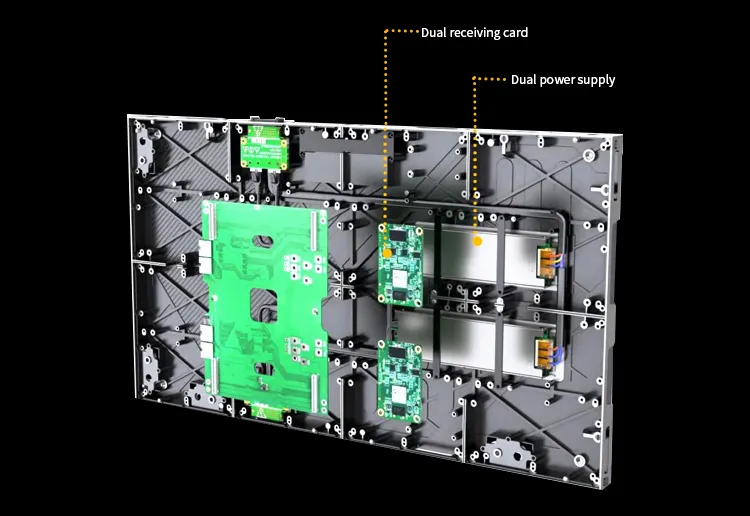
A low fault solution for dual backup design of LED display screen refers to a fault-tolerant architecture where critical components like power supplies, receiving cards, and data cables are duplicated. If the primary system fails (e.g., due to power surge or cable damage), the backup seamlessly takes over, ensuring zero or minimal interruption. This is particularly important for LED screens in high-stakes environments, where even seconds of downtime can cost $1,000+ in losses.
The “low fault” aspect emphasizes designs that not only backup but also prevent faults through monitoring and redundancy. According to Statista, 40% of LED screen failures are due to power issues, but dual backup reduces this to under 5%. For example, major events like the Olympics use these systems to keep stage screens running flawlessly for global audiences.
This solution is not just a feature—it’s a strategy for reliability, combining hardware redundancy with software monitoring.
Key Components of Dual Backup Design in LED Display Screens
- Power Backup: Dual PSUs with auto-switch.
- Signal Backup: Redundant cables/receivers.
- Controller Backup: Secondary hubs for failover.
- Monitoring System: Sensors for real-time detection.
- Software: Auto-failover algorithms.
Step-by-Step Implementation of Low Fault Dual Backup Design
- Assess Needs: Identify critical components.
- Choose Hardware: Select dual-PSU screens.
- Install Redundancy: Wire backups.
- Configure Software: Set failover thresholds.
- Test: Simulate failures.
- Monitor: Use apps for alerts.
Tip: For low fault solution for dual backup design of outdoor LED display screen, add weatherproof backups.
Case: A Las Vegas casino reduced screen faults 75% with dual backup, saving $50,000 yearly.
Types of Low Fault Dual Backup Designs for LED Display Screens
- Power Dual Backup: For power failures.
- Signal Dual Backup: For data loss.
- Full-System Dual Backup: Comprehensive redundancy.
- Hybrid Dual Backup: Combined with AI.
- Modular Dual Backup: For easy swaps.
- Outdoor Dual Backup: Weather-resistant.
| Type | Fault Coverage | Implementation Time | Ideal Applications | Average Cost Add-On (USD per m²) |
|---|---|---|---|---|
| Power | Power issues | 1-2 hours | All | $100–$200 |
| Signal | Data loss | 2-3 hours | Events | $150–$300 |
| Full-System | Comprehensive | 4-6 hours | High-Stakes | $300–$500 |
| Hybrid | AI-Enhanced | 3-5 hours | Outdoors | $200–$400 |
| Modular | Component Swaps | 1 hour | Rentals | $100–$250 |
| Outdoor | Weather Faults | 3-4 hours | Festivals | $200–$400 |

Benefits of Low Fault Dual Backup Design for LED Display Screens
- Minimized Downtime: <1% fault rate.
- Cost Savings: Reduce repairs 50%.
- Reliability: 99.9% uptime.
- Scalability: Easy for large screens.
- Safety: Prevent failures in critical uses.
Technical Specifications for Low Fault Dual Backup LED Display Screens
| Specification | Details |
|---|---|
| Backup Switch Time | <1 second |
| Fault Detection | Real-time sensors |
| Compatibility | P1.5–P10 pitch |
| Power Redundancy | Dual PSUs |
| Cost Impact | +10-20% |
| Lifespan | 100,000+ hours |
Costs of Low Fault Dual Backup Design for LED Display Screens
Add 10-20% to base screen cost ($100–$500 per m²). Full systems $1,000–$3,000 extra. ROI in 6 months via reduced downtime.
Tips for Implementing Low Fault Dual Backup Design
- Choose Compatible Screens: Modular for backups.
- Test Regularly: Simulate faults.
- Budget for Monitoring: Include software.
- Train Staff: For quick switches.
Future Trends in Low Fault Dual Backup Design for LED Display Screens
- AI predictive backups.
- Wireless redundancy.
- Sustainable low-fault tech.
FAQ: Common Questions on Low Fault Solution for Dual Backup Design of LED Display Screen
- What is a low fault solution for dual backup design of LED display screen? Redundant system for minimal failures.
- How much does a low fault dual backup design cost for LED screens? $100–$500 per m² add-on.
- Why use dual backup for outdoor LED display screens? Reduces weather-related faults.