LED video walls have become essential tools in business environments, entertainment venues, control rooms, and public spaces. Whether installed in a corporate lobby, a music festival stage, or an airport, these massive displays deliver unmatched visual impact. But how much does it actually cost to own or deploy an LED video wall? The answer isn’t simple—because the total investment depends on a variety of factors including size, resolution, technology, installation complexity, and ongoing maintenance.
1. LED Video Wall Total Cost Composition
Understanding the cost of an LED video wall means looking beyond the screen itself. The price structure typically includes:
- LED panels
- Video processors and controllers
- Power and cooling systems
- Mounting structure
- Installation labor
- Content control systems
- Transportation and logistics
- Maintenance and repairs
Each of these elements plays a significant role in the final budget. Let’s break it all down.
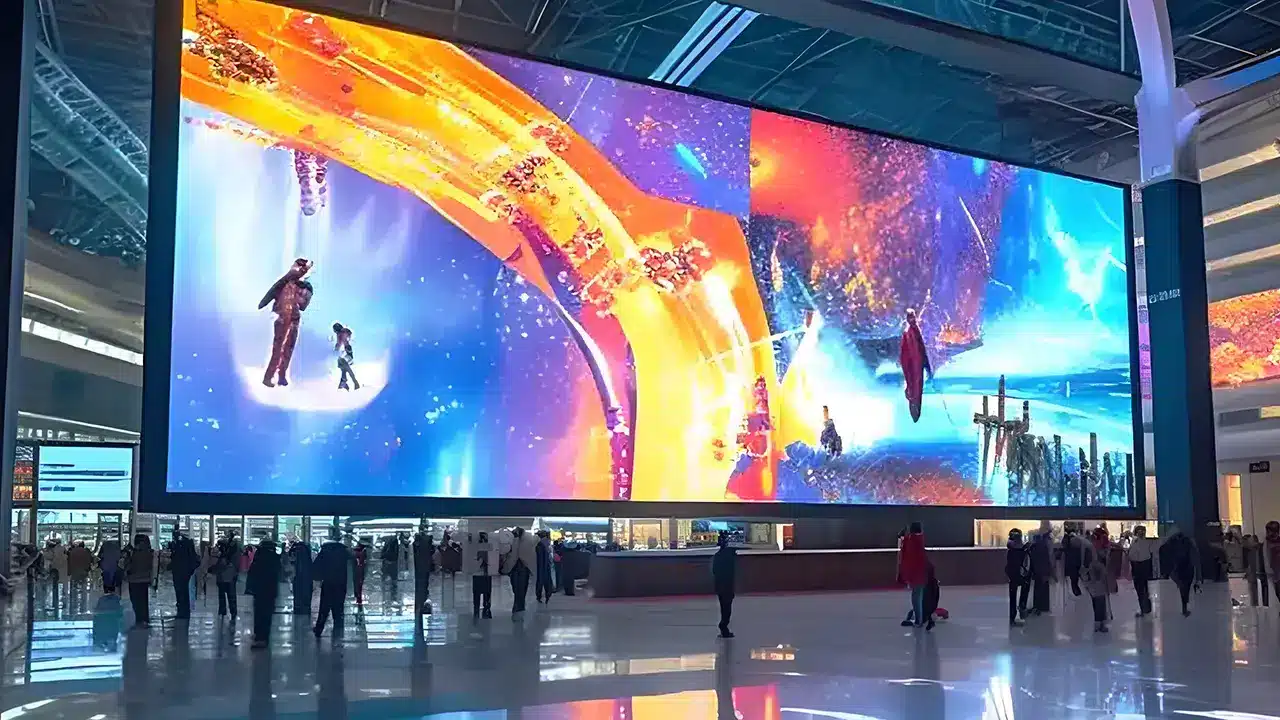
2. LED Display: The Core Component
The LED panels are the most visible—and often the most expensive—part of the system. Their cost is influenced by several variables:
Pixel Pitch
Pixel pitch refers to the distance between the centers of two adjacent pixels, usually measured in millimeters. A smaller pitch results in higher resolution and better image quality, but it also comes with a higher cost.
| Pixel Pitch | Typical Use Cases | Price per m² |
| P1.2–P2.5 | Indoor, high-resolution needs | $2,500–$5,000 |
| P3–P4 | Indoor/outdoor mid-range | $1,500–$3,000 |
| P5–P10 | Outdoor advertising, large venues | $1,000–$2,000 |
For example, a 10-square-meter indoor wall with a 2.5 mm pitch could cost around $30,000–$50,000 just for the LED panels.
3. Video Controllers and Processors
A video processor is the brain behind the LED wall. It receives video input from various sources and transmits it to the individual LED panels.
- Basic processors for small setups: $2,000–$5,000
- Advanced processors with real-time rendering and 4K capabilities: $10,000–$30,000
- High-end media servers for live shows, 3D effects, and multi-screen control: $30,000–$100,000+
Many installations also require multiple processors and backup units, especially for mission-critical applications.
4. Mounting Structures and Installation
A sturdy mounting system ensures stability, alignment, and safety. The cost depends on the weight, location (wall-mounted vs freestanding), and whether indoor or outdoor.
- Simple indoor mounts: $500–$2,000
- Custom frames and enclosures for outdoor or curved walls: $5,000–$20,000
- Installation labor: $1,000–$10,000 depending on size and complexity
A large outdoor billboard on a rooftop will cost considerably more to mount than a flat indoor wall in a showroom.
5. Power Supply and Cooling
LED video walls consume a significant amount of electricity and may require active cooling systems to prevent overheating.
| Component | Cost Estimate |
| Power distribution | $500–$3,000 |
| Surge protection units | $100–$500 per unit |
| Airflow/cooling system | $1,000–$10,000+ |
Energy-efficient designs can save money in the long run, especially in 24/7 applications like control rooms or retail signage.
6. Cabling, Signal Distribution & Control
Cabling is often overlooked in budgeting, but it’s critical to system performance.
- High-grade video cables (HDMI, DisplayPort, SDI): $500–$2,000
- Ethernet or fiber-optic signal distribution: $1,000–$5,000
- Backup wiring or wireless failovers: $2,000+
Professional-grade LED video walls require precise signal routing to avoid latency, screen tearing, or sync issues.
7. Software & Content Management
In many cases, LED walls are used for dynamic or interactive content. This requires robust control software.
- Basic software licenses: $2,000–$10,000
- Cloud-based CMS platforms with remote scheduling and real-time updates: $15,000–$50,000
- Interactive content modules (gesture, touchscreen): Additional $5,000–$20,000
Some vendors offer proprietary solutions bundled with hardware, while others may need third-party integration.

8. Maintenance, Warranty & Operating Costs
LED video walls are durable but not maintenance-free. Operating costs include:
- Cleaning and recalibration: $1,000–$5,000 annually
- Pixel/module replacements: $50–$300 per module
- Extended warranty programs: $1,000–$10,000
- Energy consumption: Large walls can draw 3–10 kW, translating to thousands in electricity bills annually
Indoor systems typically have lower maintenance demands than outdoor ones, which are exposed to weather and pollutants.
9. Real-World Budget Examples
Example 1: Corporate Lobby Wall (10 x 6 ft, Indoor)
- Panel Cost (P2.5): $18,000
- Processor: $4,000
- Mounting: $1,500
- Installation Labor: $2,000
- Cabling & Power: $2,500
- CMS Software: $5,000
Total: $33,000
Example 2: Outdoor Billboard (5 x 10 meters, P6)
- Panel Cost: $75,000
- Weatherproof Structure: $20,000
- Power System: $5,000
- Processor & Control: $12,000
- Installation: $10,000
Total: $122,000
Example 3: Rental Event Wall (3 x 4 meters, Indoor)
- Short-term Rental (3 days): $6,000–$10,000
Includes delivery, rigging, setup, and technician support.
10. Other Influencing Factors
Indoor vs Outdoor
Outdoor LED walls require higher brightness levels (4,000–7,000 nits), waterproof enclosures, and rugged materials. This typically raises the cost by 30–50% over comparable indoor models.
Curved and Flexible Installations
Custom-shaped walls such as curved, concave, or wraparound formats are significantly more expensive due to:
- Specialized panels or flexible PCBs
- Custom mounting hardware
- Increased calibration and structural planning
Country of Origin and Supplier
Costs vary depending on whether the system is sourced from local manufacturers or imported:
- China-based brands often offer lower hardware costs with high customization options
- European and US-made systems tend to be more expensive but may offer stronger warranties and support networks
11. Lifecycle and Return on Investment
Despite the upfront cost, LED walls offer a long service life. Most panels are rated for 50,000–100,000 hours of usage. Over a 7–10 year lifespan, the annualized cost becomes more manageable.
Moreover, for businesses using LED walls for marketing, entertainment, or retail, the potential return in terms of customer engagement and revenue often outweighs the expense.
12. Commonly Asked Questions (FAQ)
Q: How do I calculate the right screen size for my location?
Measure both the wall dimensions and expected viewing distance. A pixel pitch of 1.5–2.5 mm is ideal for close viewing; 4 mm and above is better for larger venues.
Q: Can LED walls be installed in daylight or outdoors?
Yes, with proper brightness (usually 5,000 nits or more) and waterproof enclosures. Outdoor installations also need ventilation and UV protection.
Q: Are rental LED walls more cost-effective than purchasing?
For short-term use (events, pop-ups), renting is typically more economical. For permanent installations, ownership offers better long-term value.
Q: Do LED walls come with software?
Most professional-grade systems include basic control software. Advanced content scheduling or interactivity may require additional licenses.
Q: Is it possible to expand an LED wall later?
Yes, if the original system is modular and expansion was planned. Panel matching and controller compatibility should be confirmed in advance.
Determining the cost of an LED video wall involves multiple intertwined factors from panel technology to installation and maintenance. By carefully considering size, resolution, environment, and usage, organizations can plan a display solution that balances cost and performance effectively. While initial investments may be substantial, the long-term benefits in visual impact, engagement, and versatility often make LED video walls a worthy asset.